
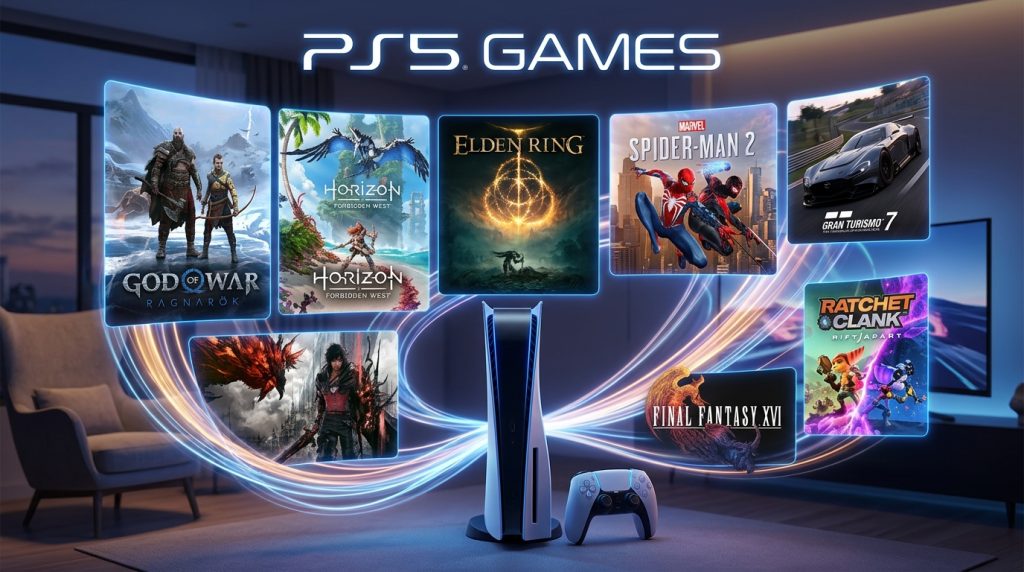
The gaming landscape has undergone a monumental shift over the last few years, driven by massive leaps in hardware capability and immersive software design. At the center of this revolution is Sony’s flagship console, which has redefined how players interact with digital worlds. From near-instant loading times to mind-bending graphical fidelity, modern console gaming offers an unparalleled level of escapism. For enthusiasts looking to dive deep into these experiences, finding a dedicated community or a specialized PLAYSATION GAMING CHANNEL to track gameplay strategies and hidden secrets has become an essential part of the modern gaming lifestyle.
Understanding what makes this generation of gaming so special requires looking closely at both the engineering marvels under the hood and the incredible library of titles driving players to their screens.
The Architecture of Modern Immersion
What truly separates the current era from past generations is the focus on tactile and sensory immersion. In the past, raw graphical power was the primary metric of generational leaps. Today, the experience is defined by speed and physical feedback.
- The SSD Revolution: Traditional hard drives forced developers to design long hallways, elevator rides, or explicit loading screens to mask data streaming. Custom solid-state drives (SSDs) pull assets instantly, allowing for seamless transitions between sprawling open worlds and dense urban environments.
- Haptic Feedback: Standard rumble motors have been replaced by dual actuators, offering nuanced vibrations that mimic environmental factors. Players can feel the distinct friction of running through deep mud, the harsh drop of rain against armor, or the specific recoil of different mechanical tools.
- Adaptive Triggers: Dynamic resistance levels built into the controller triggers simulate the physical tension of pulling a bowstring or slamming on the brakes of a high-performance vehicle, linking physical muscle memory directly to on-screen actions.
This combination of structural speed and sensory feedback ensures that players are no longer passive observers. Instead, they are entirely integrated into the physics of their digital surroundings.
A New Era of Game Design
With advanced hardware handling the heavy lifting, studios have pushed the boundaries of traditional genres. Action-adventures, role-playing epics, and competitive shooters have all evolved to utilize ray tracing, which simulates realistic light behavior, reflections, and shadows in real-time.
When exploring the expansive catalog of PS5 GAMES, the depth of narrative design becomes immediately apparent. Developers are no longer restricted by memory limitations, enabling them to populate cities with dense crowds of unique non-player characters (NPCs), create highly complex artificial intelligence routines, and construct branching narratives where choices carry permanent, structural consequences within the game world.
Furthermore, the integration of 3D spatial audio engines allows players to pinpoint sounds geometrically. Hearing a subtle footstep directly behind or above a character drastically alters tactical decision-making in competitive environments, elevating audio design from a atmospheric luxury to a core gameplay mechanic.
The Rise of Gaming Communities and Content Creation
Gaming is no longer a solitary hobby confined to a living room. It has grown into a massive global spectator sport and a collaborative social ecosystem. As titles grow more complex, with intricate mechanics, deep lore, and challenging endgame content, players naturally seek out high-quality visual content to enhance their own skills.
Digital content platforms have allowed expert players to share comprehensive walkthroughs, build guides, and cinematic let’s-play series. These videos serve multiple purposes: they help players overcome notoriously difficult boss fights, showcase high-level competitive strategies, and allow casual viewers to experience rich, story-driven narratives without needing to hold the controller themselves. This community-driven culture bridges the gap between mechanical execution and entertainment, transforming popular titles into shared cultural milestones.
Evolution of Competitive and Cooperative Play
Online infrastructure has matured significantly, offering smoother matchmaking, lower latency, and robust cross-platform functionality. Multiplayer titles now lean heavily into cooperative mechanics that require real-time communication, synchronized tactical execution, and specialized team roles.
Whether diving into high-stakes tactical shooters or teaming up with friends for massive online raids, the current generation emphasizes community and shared victory. Continuous post-launch support, seasonal content updates, and developer responsiveness ensure that modern titles remain active, evolving landscapes that keep player bases engaged for years after the initial launch date.
