
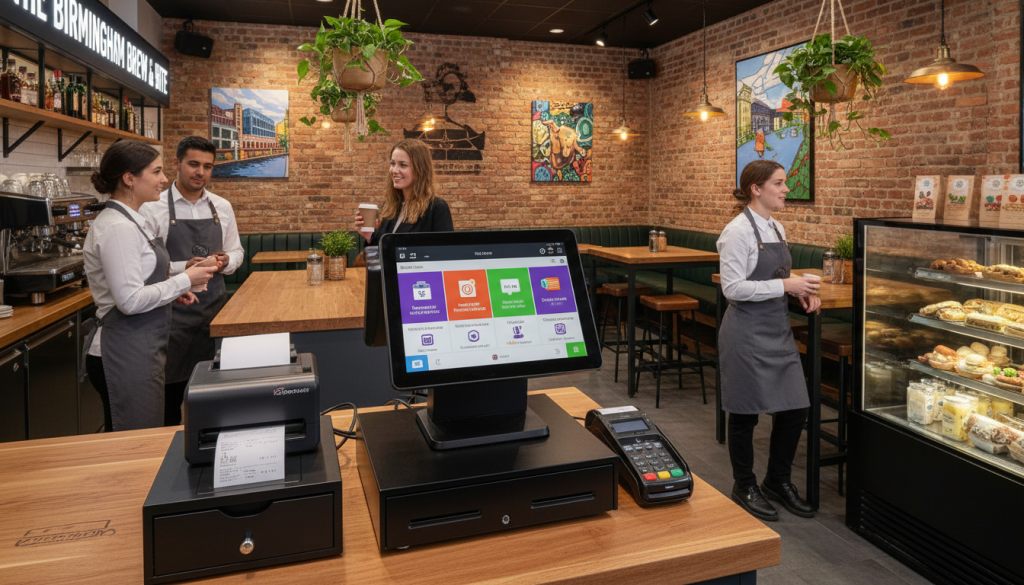
Birmingham’s hospitality scene is undergoing a remarkable transformation. From the bustling corridors of the Jewellery Quarter to the high-end eateries of Colmore Row, the city has firmly established itself as a premier culinary destination in the UK. However, with this growth comes increased competition and rising operational costs. For local entrepreneurs, the secret to maintaining a competitive edge often lies in the efficiency of their “digital engine”—the Point of Sale (POS) system.
For those managing high-volume dining establishments, the search for a reliable restaurant POS Birmingham has become a priority to ensure that front-of-house service matches the quality of the kitchen’s output.
The Pulse of Birmingham’s Independent Coffee Scene
The “Second City” is home to some of the most innovative independent coffee shops in the country. These spaces serve as community hubs, remote offices, and morning sanctuaries for thousands of Brummies. But beneath the relaxed atmosphere, cafe owners face the logistical challenge of handling rapid-fire transactions and complex inventory needs.
Investing in a specialized Cafe POS system Birmingham is no longer just about processing payments. It’s about total shop management. Modern systems allow owners to:
- Reduce Queue Times: In a city where commuters are always on the move, a laggy checkout process is a dealbreaker. Modern POS hardware ensures transactions are completed in seconds.
- Inventory Precision: Tracking milk varieties, bean stock, and pastry waste in real-time prevents “out-of-stock” scenarios during the morning rush.
- Loyalty Integration: Digital loyalty schemes integrated directly into the POS help turn one-time visitors into daily regulars.
Elevating the Dining Experience in the West Midlands
Birmingham’s reputation for fine dining and diverse international cuisine requires technology that can keep up with complex service requirements. A standard cash register simply cannot handle the nuances of a busy Saturday night in a city centre restaurant.
When selecting a restaurant POS Birmingham, savvy restaurateurs look for features that bridge the gap between the dining room and the kitchen. Kitchen Display Systems (KDS), table-side ordering, and intelligent floor plan management are essential tools. By allowing servers to send orders directly to the kitchen via handheld tablets, errors are minimized, and the “theatre” of service remains uninterrupted.
Furthermore, with the rise of the “delivery economy,” having a system that consolidates orders from various third-party apps into a single interface is crucial for maintaining sanity behind the bar.
Data-Driven Growth for Local Entrepreneurs
One of the most significant advantages of partnering with a provider like Cube POS is the access to high-level analytics. For a business to grow in Birmingham’s fast-moving market, decisions must be based on data, not guesswork.
A robust system provides insights into:
- Peak Hour Staffing: Understanding exactly when your busiest periods occur allows for smarter labor scheduling.
- Menu Engineering: Identifying high-profit items versus “dead weight” allows you to refine your menu for maximum ROI.
- Customer Spend Patterns: Seeing how much the average guest spends helps in tailoring promotional offers that actually move the needle.
Future-Proofing Your Hospitality Brand
As we move further into a digital-first era, Birmingham’s hospitality businesses must be agile. The integration of QR code ordering, contactless payments, and cloud-based reporting means that an owner can manage their business from a laptop at home as easily as they can from the shop floor.
Choosing the right Cafe POS system Birmingham isn’t just a purchase; it’s a strategic partnership. It provides the foundation upon which a brand can scale, whether that means opening a second location in Solihull or expanding into a full-scale franchise.
Conclusion
The hospitality industry in Birmingham is built on passion and hard work. However, in the modern landscape, passion needs to be supported by reliable technology. By implementing a system that streamlines operations and captures vital data, business owners can spend less time looking at screens and more time engaging with their customers. In the end, that human connection—supported by invisible, efficient tech—is what keeps Birmingham’s dining scene thriving.
